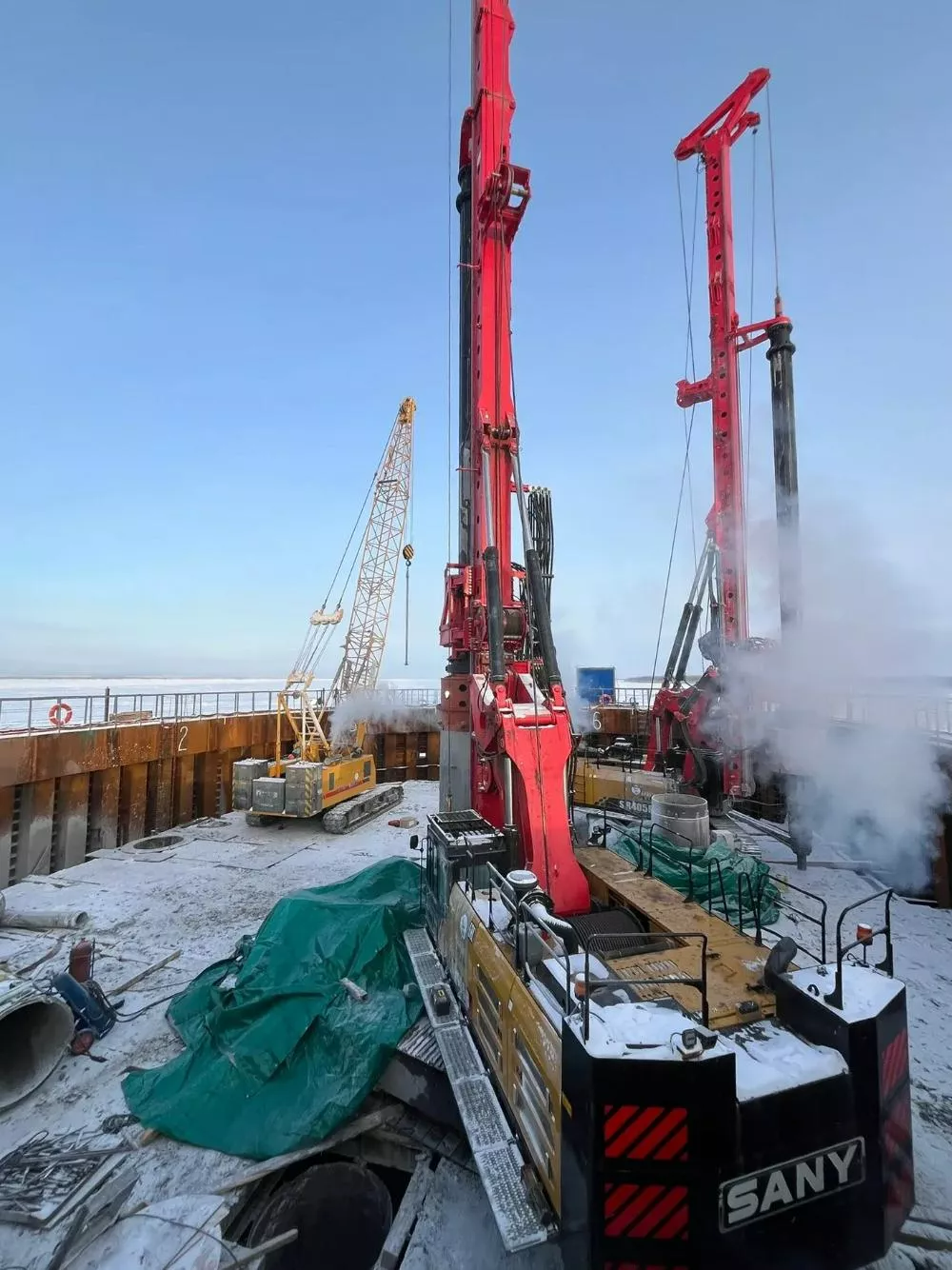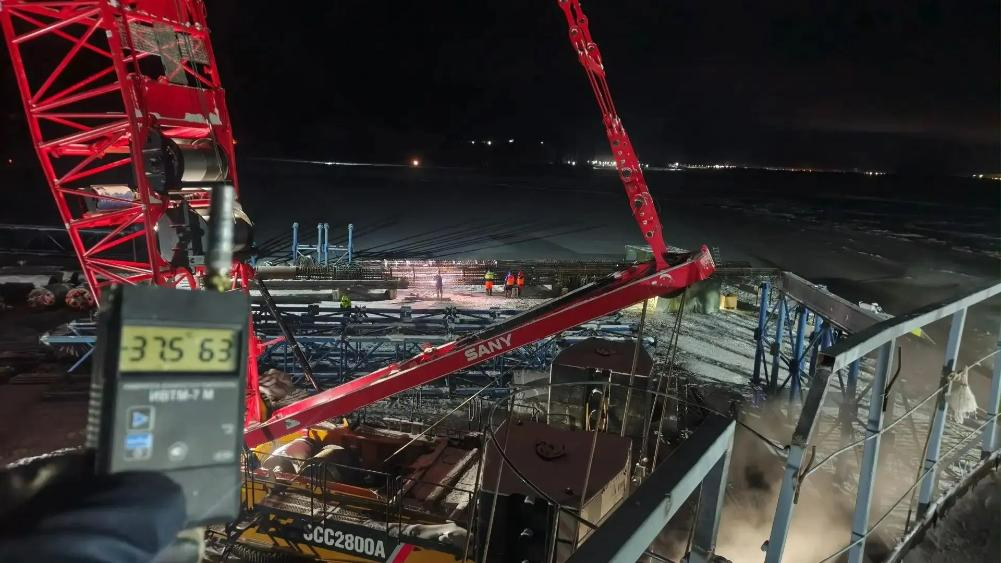
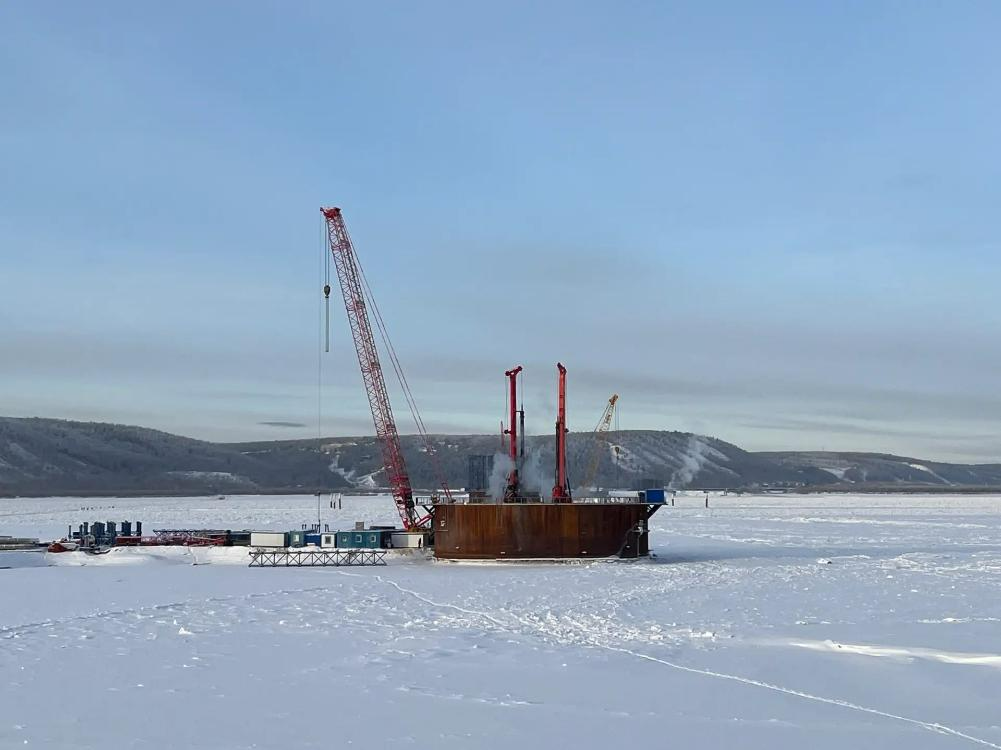
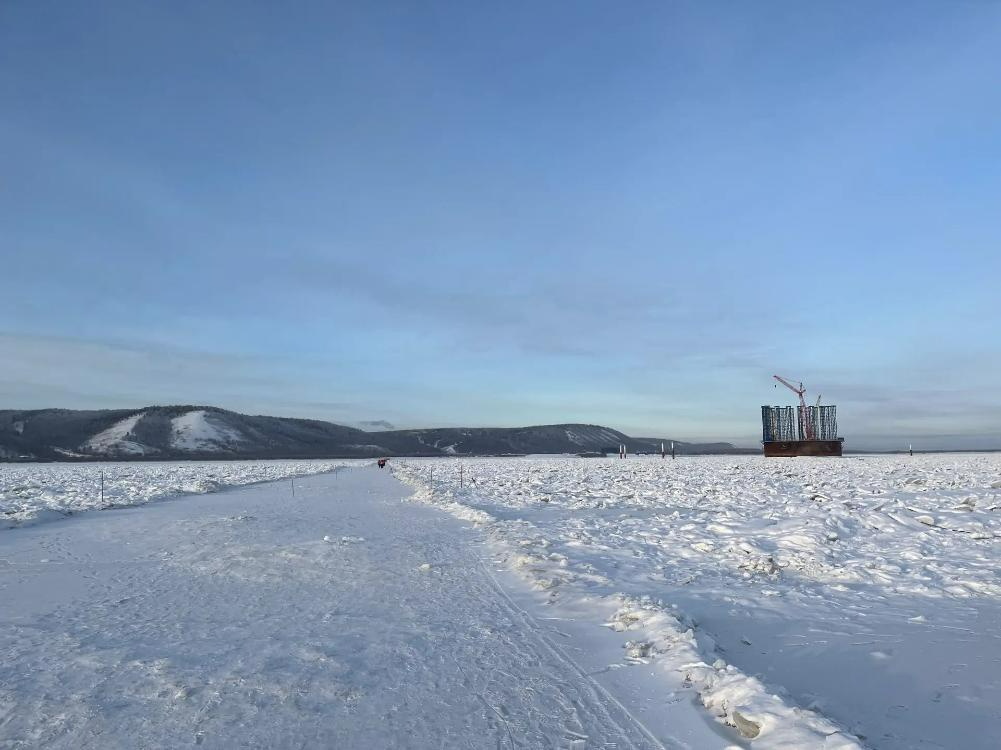
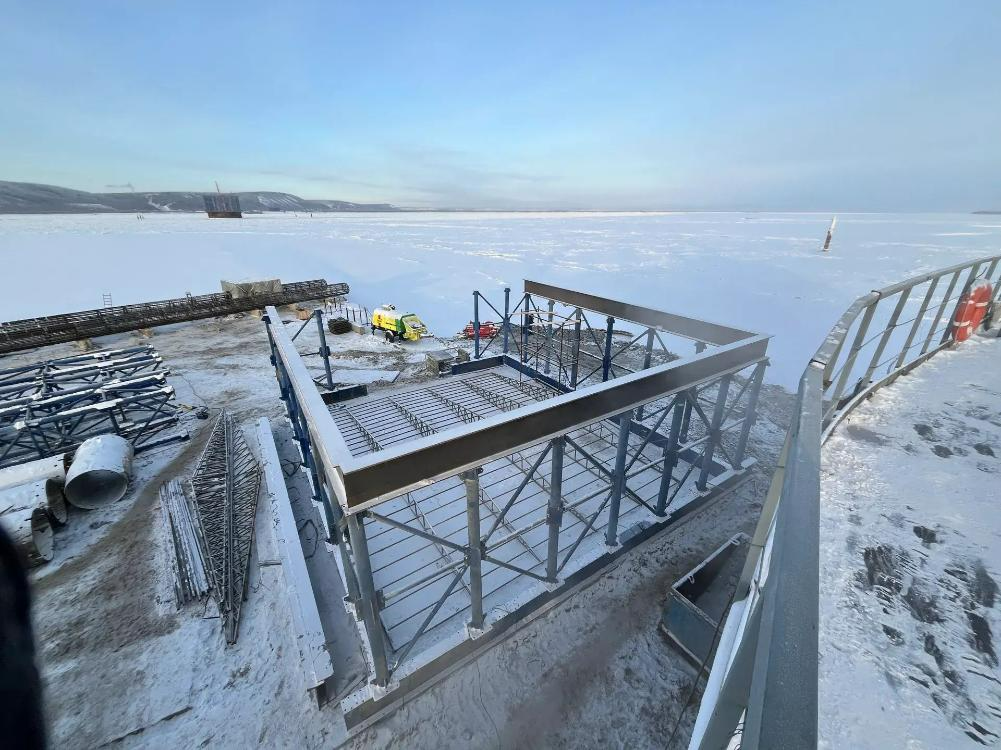
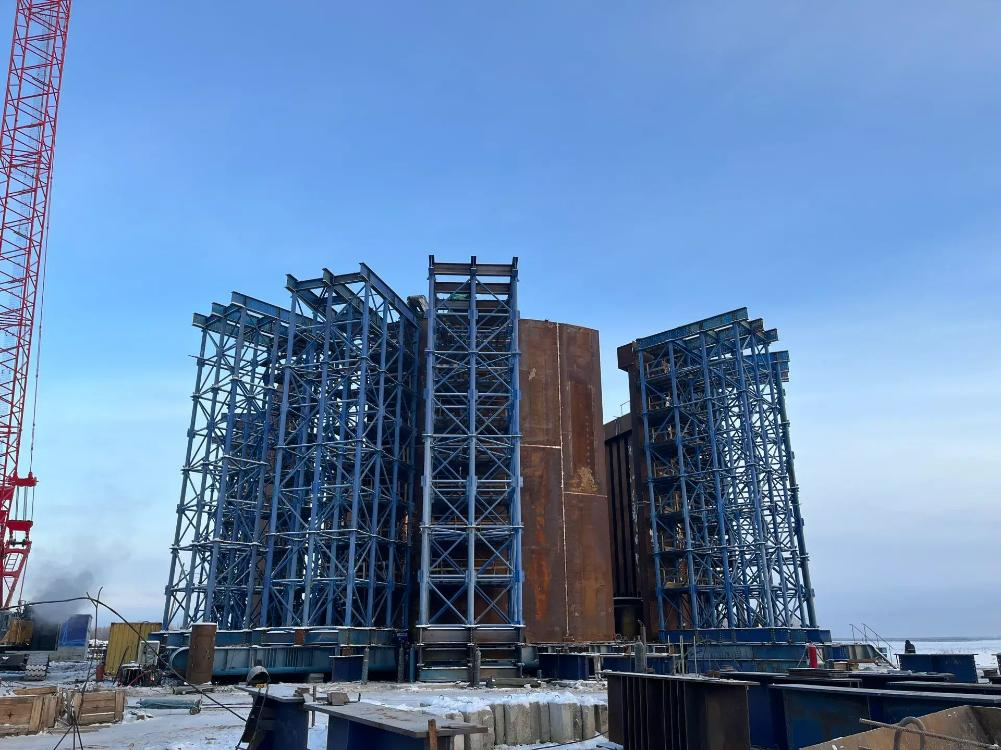
Work on the pile foundations for the Lena Bridge pylons continues around the clock, despite the onset of freezing temperatures. At night, the air temperature in the construction area drops as low as -40°C. To ensure that work remains uninterrupted under these conditions, special shelters are being set up for personnel and equipment.
A protective metal framework, reaching heights of up to 28 meters, is being erected over the central pylon’s cofferdam; this will allow drilling and pile installation to continue even in extreme sub-zero temperatures. Prior to this, all necessary machinery – including drilling rigs and a crane – was positioned inside the cofferdam. Metal reinforcement cages will be transported from the shore via the river, a process facilitated by an ice road currently nearing completion. Spanning over 2 kilometers, the ice road is designed to support vehicles weighing up to 40 tons once the ice reaches a thickness of 150 cm, with its capacity increasing to 300 tons as the ice thickens to 220 cm. During the winter, the road will also serve as a vital link between the construction sites located on both banks of the river.
Similar protective structures are also being installed over the cofferdam near the right bank, where a shelter is being set up for a truck-mounted concrete pump. Continuing the installation of bored piles within the cofferdams throughout the winter is critical for successfully navigating the spring ice breakup and flood season; these piles will ensure the stability of the massive metal structures placed within the Lena River channel.
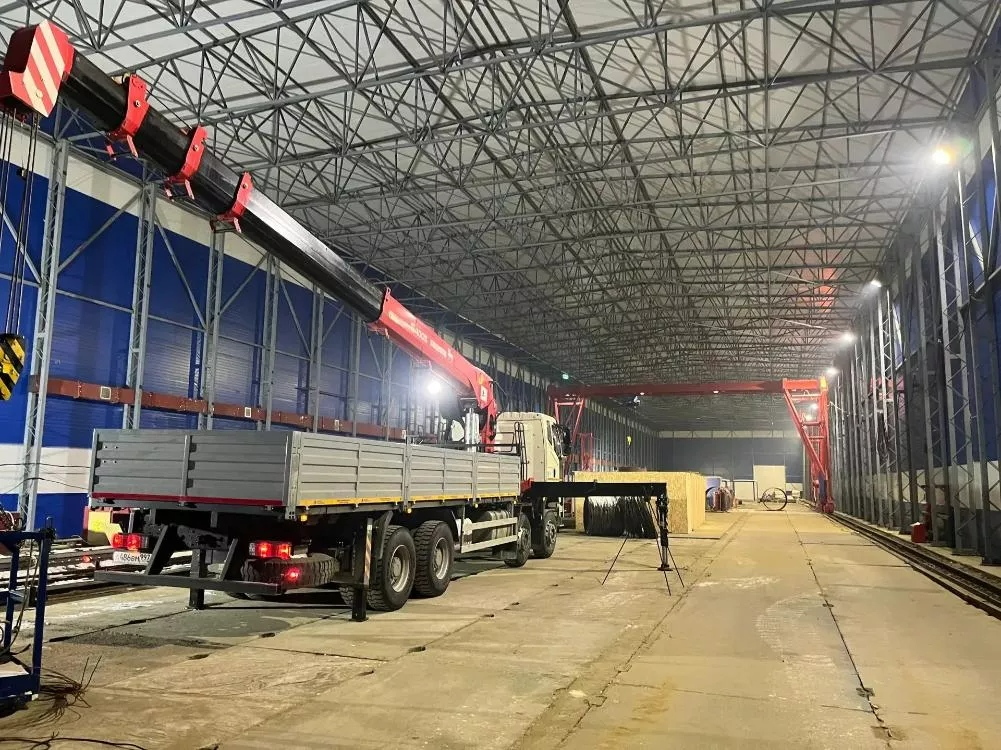
At the first construction site on the left bank, work is nearing completion on a heated production facility. This building will be used to manufacture metal reinforcement cages for bored piles, as well as guide pipes for the third cofferdam. This will not only ensure that work can continue during severe frosts but will also boost labor productivity.
At the second construction site, the installation of wall panels for the cofferdam – intended for the pylon near the left bank – is nearing completion. Thirty out of 38 panels have already been installed, and the joints between them are currently being welded. This is the last of the three cofferdams; it is scheduled to be moved into the river channel once the 2027 ice drift and spring flood season have concluded.
The Lena Bridge is a concession project of VIS Group and the Government of the Republic of Sakha (Yakutia). Engaging a private investor has made it possible to design and begin construction on this highly complex infrastructure project under extreme conditions. The 4.6-kilometer cable-stayed bridge is part of the “Infrastructure for Life” national project. It will be the only bridge in the world built in the Arctic zone on permafrost. Year-round vehicular access will have a positive impact on all aspects of life in the Republic: it will help lower the cost of the market basket, foster the development of riverside areas, and facilitate the creation of new industrial facilities and logistics hubs. The bridge is expected to generate a significant multiplier effect – estimated by the Russian Ministry of Economic Development to be 1.6 times the value of the initial construction investment.
Follow VIS Group: