
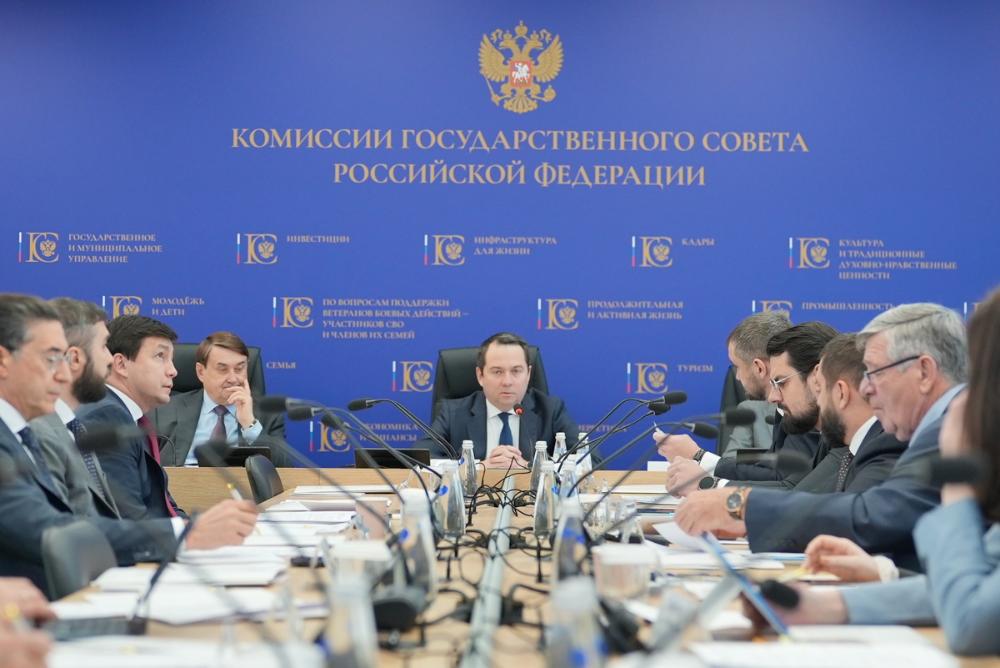
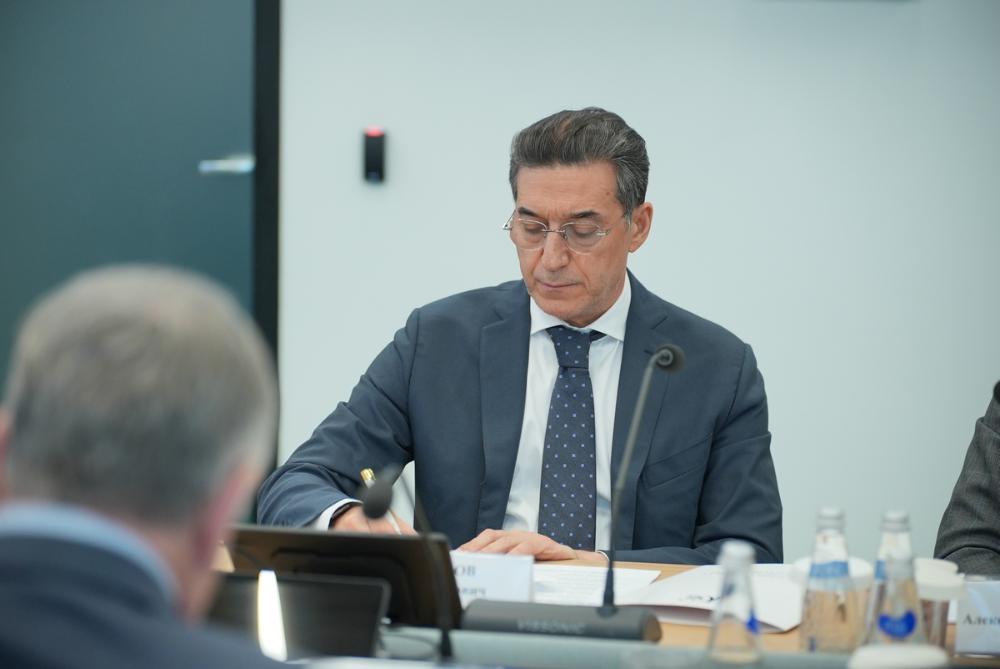
During a meeting of the State Council of the Russian Federation Commission on the Northern Sea Route and the Arctic held on October 27 in Moscow, participants reviewed a draft federal law titled “On the Unified Territory of Advanced Development (UTAD) for the Far East and the Arctic Zone of the Russian Federation.” VIS Group’s Chairman of the Board of Directors Sergey Romashov took part in the discussion of the draft law.
The draft law provides for the creation of a unified preferential regime for new investment projects in the Russian Far East and the Arctic. The proposal aims to standardize the criteria for obtaining resident status within the unified preferential zone, consolidate the existing key support mechanisms, and establish guarantees for businesses for the entire duration of their investment agreements.
This new approach is intended to create more predictable conditions for attracting private investment into projects with long investment cycles. According to the draft, the unified regime is set to take effect on January 1, 2027, and will remain in place until December 31, 2100.
“Developing the Arctic requires large-scale, long-term investment in transport and social infrastructure. For such projects, it is essential to have predictable business conditions, stable state support mechanisms, and a clear allocation of risks between the government and private investors,” commented Sergey Romashov. “Refining these preferential regimes could serve as a vital tool for attracting non-budgetary funding and implementing projects essential to the development of the country’s Arctic zone, based on the principles of public-private partnership.”
VIS Group carries out projects that directly impact the quality of life in northern regions by developing modern infrastructure in some of the most challenging climatic conditions. In September 2026, the Group in collaboration with the Far East and Arctic Development Corporation and the Crystal Fund signed an agreement to cooperate on attracting investment for a comprehensive Arctic development project, including the Trans-Arctic Transport Corridor (TTC). The parties are currently exploring financing options for these infrastructure projects under a public-private partnership (PPP) framework.
Follow VIS Group:


