

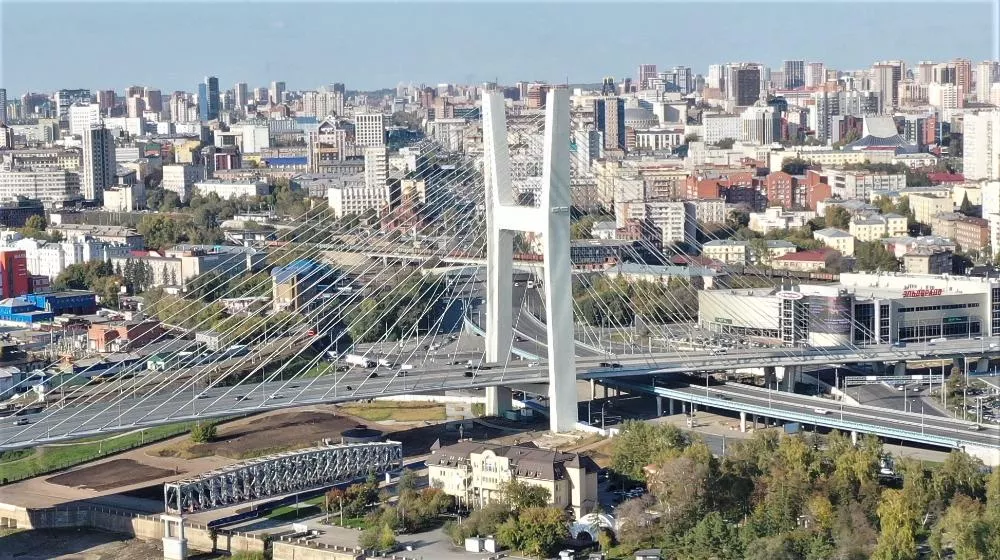

At the initiative of Novosibirsk Mayor Maxim Kudryavtsev, a poll was conducted on the Gosuslugi (State Services) portal to select a name for the bridge built by VIS Group under a concession agreement with the regional government. 70% of the poll participants supported the proposal to give the new bridge the historical name Novo-Nikolayevsky. VIS Group management had previously put forward this proposal, which was supported by historians from the Novosibirsk Museum and various civic organizations.
Novo-Nikolayevsk is the historical name of the Siberian capital, chosen in honor of the last Russian Tsar, Nicholas II. Its founding in 1893 was linked to the construction of a railway bridge across the Ob River as part of the Trans-Siberian Railway project. The new bridge begins on the right bank at the exact location where that original bridge once stood. The city was renamed Novosibirsk in 1926.
The previously built bridge was most commonly referred to as the Central Bridge; now, it may receive a name closely tied to the city's founding history. Traffic opened in December 2025. Currently, the average traffic volume is 30,000 vehicles per day in both directions. Based on averaged data from traffic sensors installed on the bridge by the Novosibirsk Region Traffic Management Center (TsODD), approximately 6 million motorists have used the new crossing since it opened.
The bridge enables uninterrupted, signal-free travel from the right bank to the left bank, connecting to the highway leading to Tolmachevo Airport. The bridge crossing spans 1.5 km, including a three-span cable-stayed section with a total length of 380 meters. A 114-meter-tall pylon supports a system of 70 stay cables with a combined length of 8,965 meters; the longest cable measures 235 meters, while the shortest is 63 meters. This modern, six-lane roadway that stretches over 5 km offers a faster route and helps reduce the traffic load on other bridges.
Follow VIS Group:


