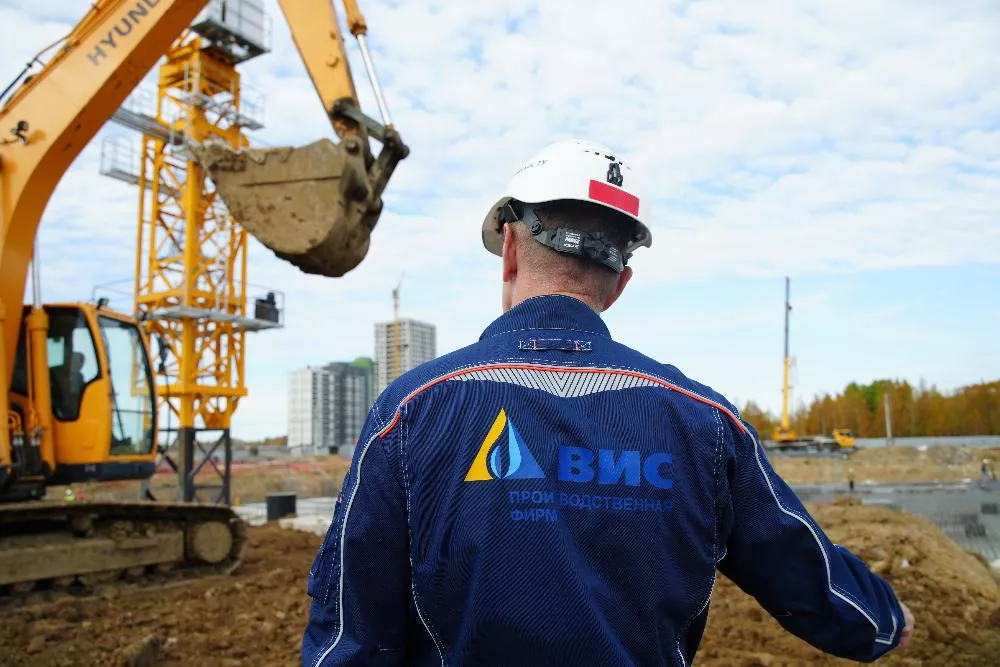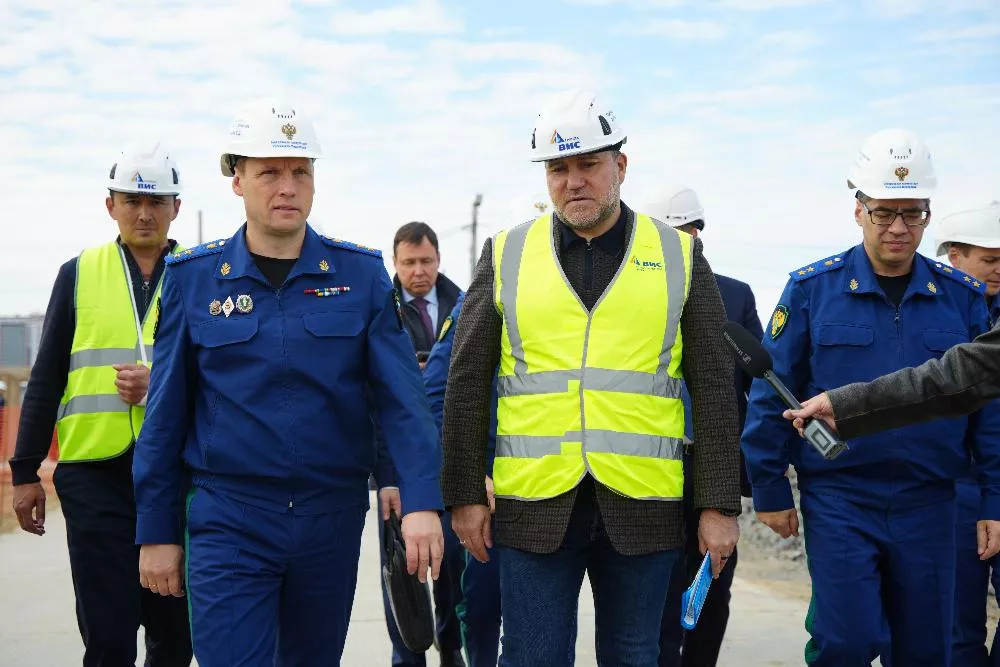
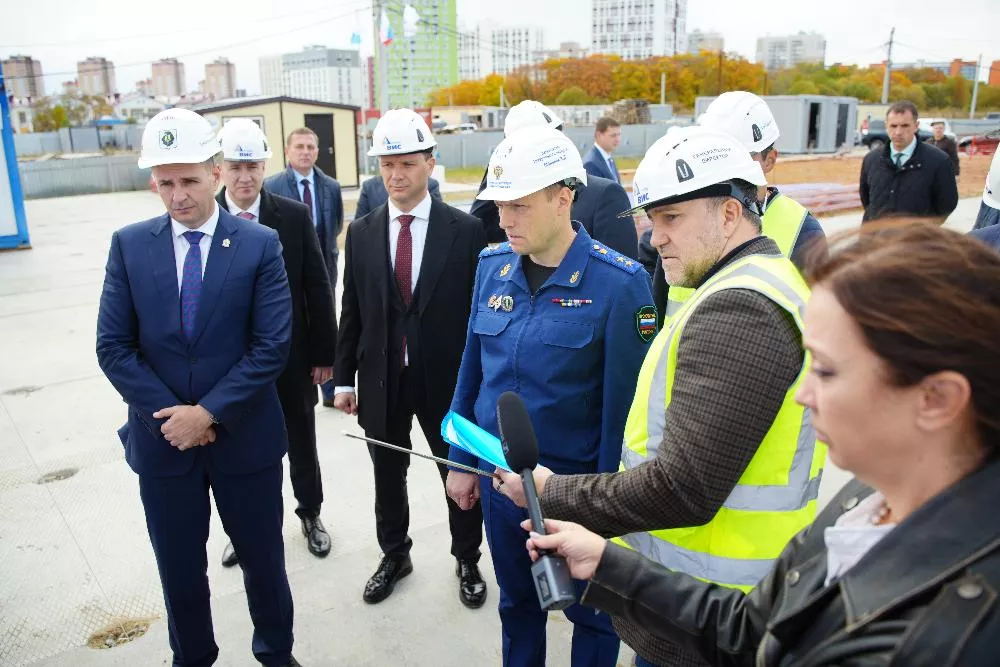
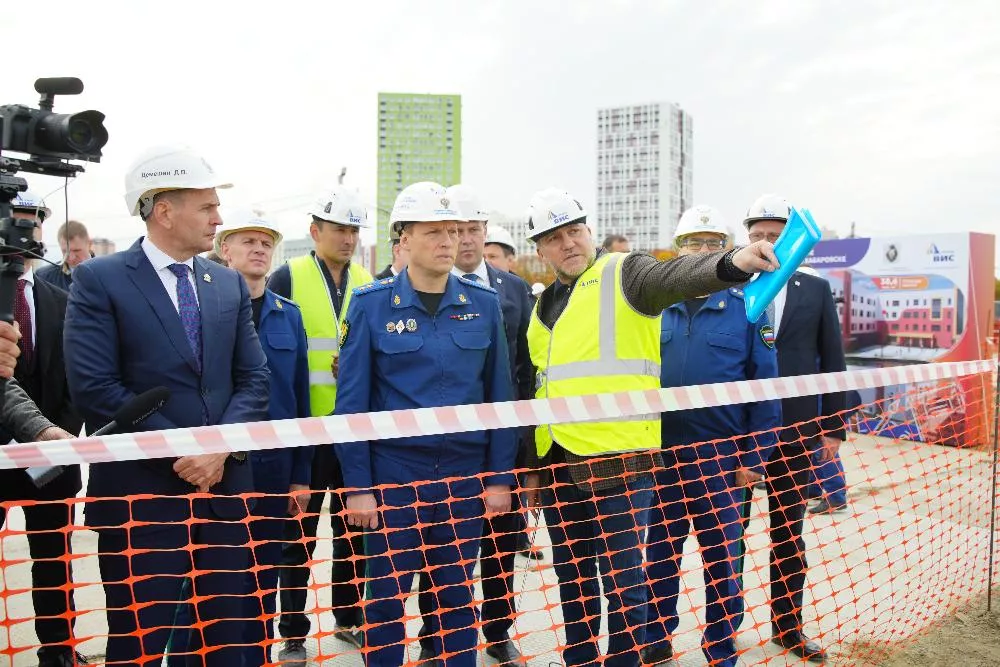
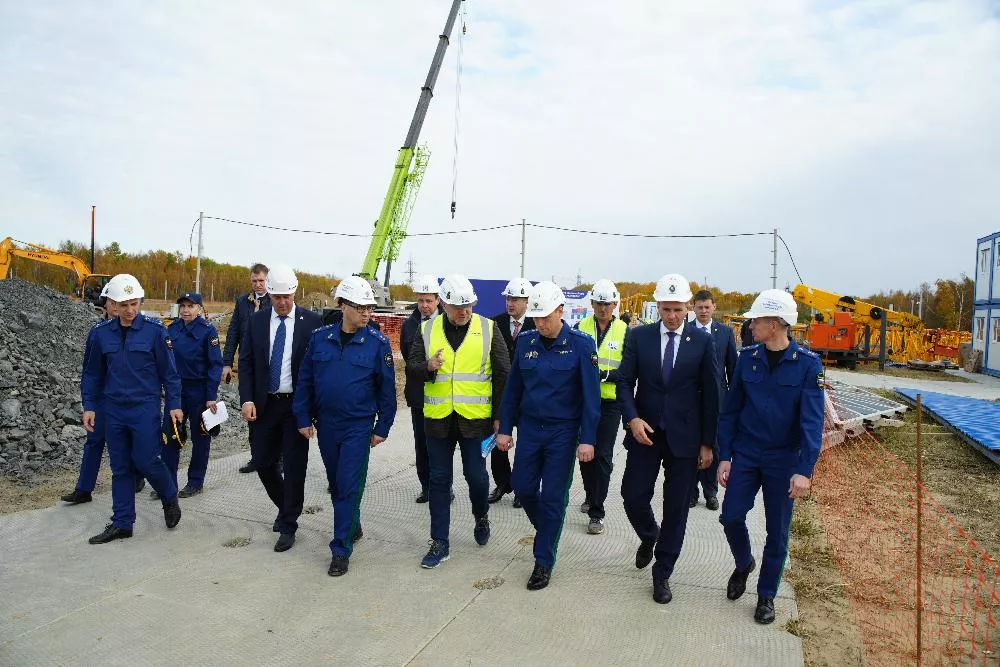
The school, currently under construction in Khabarovsk’s Orekhovaya Sopka neighborhood, is designed to accommodate 2,100 students. There are only a few educational institutions of this scale in Russia. The size of the new educational complex reflects the needs of this rapidly developing city district. The comprehensive development of such areas, complete with all necessary social infrastructure, has become a mandatory requirement and a priority of urban planning policy. Russian Deputy Prosecutor General Viktor Melnik and Khabarovsk Region Governor Dmitry Demeshin inspected the construction progress of this essential social facility.
The project in Khabarovsk is being implemented by VIS Group under a concession agreement with the regional government. The concessionaire is responsible for securing non-budgetary funding, as well as the design, construction, and technical operation of the school building until the concession expires in 2038. This arrangement allows the regional budget to repay the investor's funds in installments. The concession’s financial model relies on non-budgetary funding for over 70% of the construction phase costs. Consequently, the region will pay for the operational social infrastructure gradually over time.
“We took over this project from a previous concessionaire that failed to meet its obligations to the region. Therefore, it was crucial to begin construction as quickly as possible. We utilized existing design work and ran simultaneous processes. This allowed us to proceed with on-site work based on sections of the design documentation that had already been approved during the state expert review process. We recognize the vital importance of this school, so we are making every effort to optimize construction workflows,” said Sergey Yudin, CEO of VIS Group.
The four-story building will have a total area of over 39,700 m², with a building footprint of 10,500 m². The educational complex will be divided into separate blocks for primary and secondary/high school students. To accommodate the student population, the project incorporates six sports halls and two assembly halls with capacities of 430 and 780 seats. In addition to 84 standard classrooms, a creative hub featuring an animation studio and an information and library center spanning over 500 m² will be created. A stadium and various sports grounds will be built on the surrounding territory.
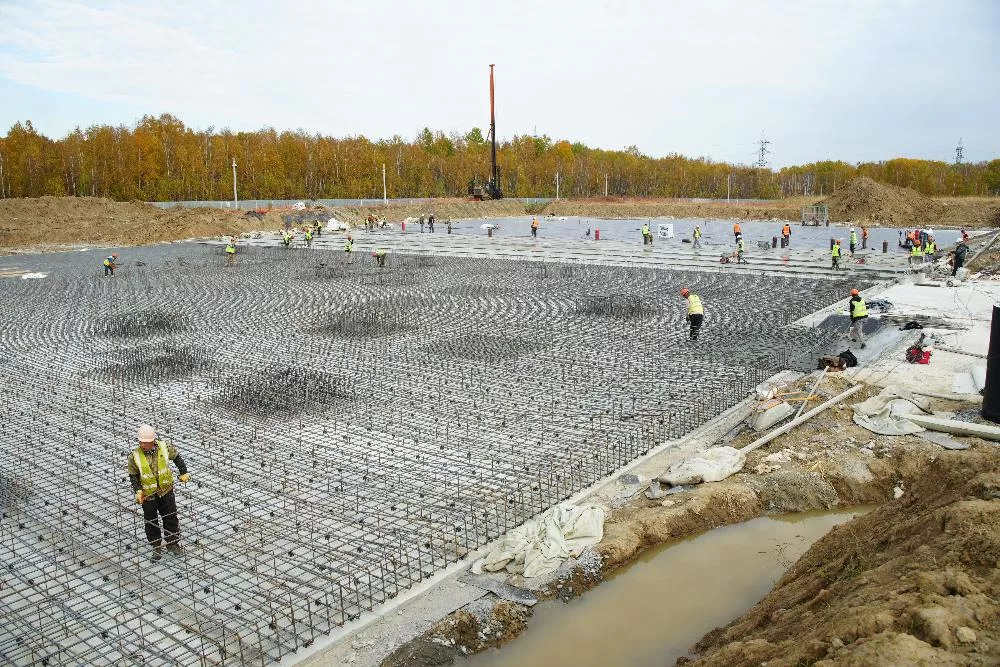
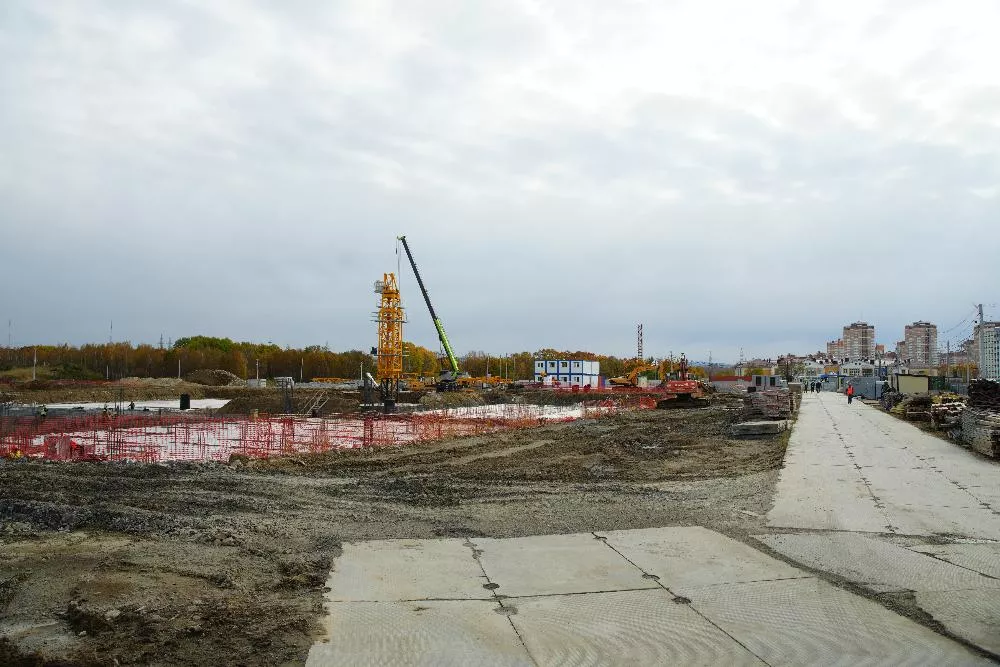
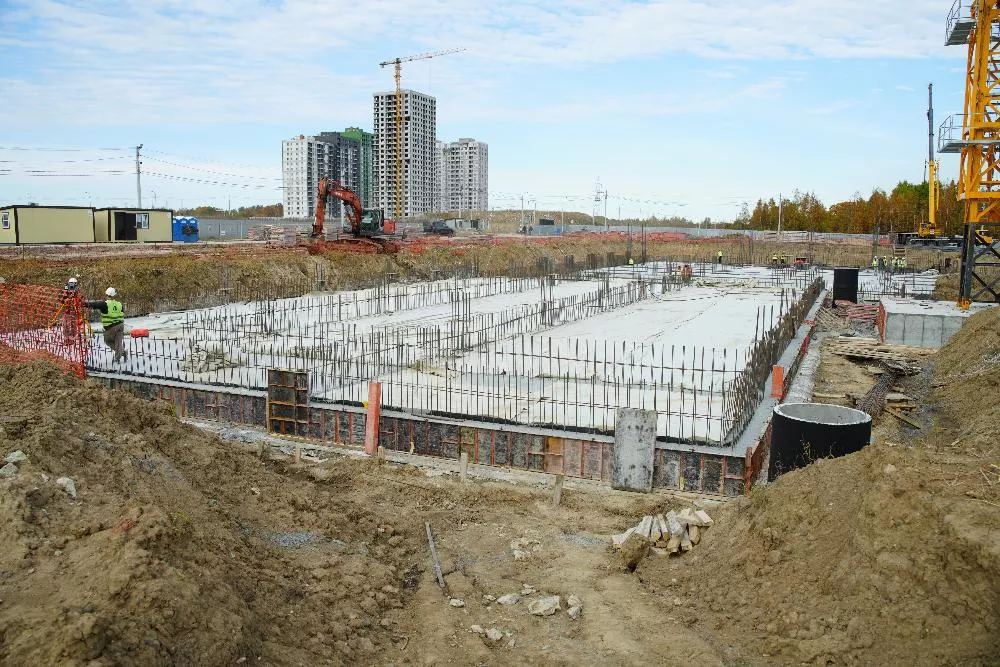
To date, excavation work has been completed down to the design levels across all six sections, involving the removal of over 11,300 m³ of soil. The concrete base has been laid, waterproofing applied, and the pouring of foundation slabs has begun (with two of the six already underway). Two tower cranes have been delivered to the site and are currently being assembled. Plans for the remainder of the year include completing the building's foundation and erecting the basement and first floors, while moving on to the structural work for the second floor. Meanwhile, the development of design documentation continues. Site surveys are 100% complete, and a positive opinion on them was received from Glavgosexpertiza (the State Expert Review Agency) in August. On September 15, following an expert review process, approval was obtained for the structural design section. The full project documentation is scheduled for submission to the state review agency in October, with a positive conclusion expected in December 2026.
Follow VIS Group: