



The Mytishchi High-Speed Chord, built by VIS Group under a concession agreement with the Moscow Region Government, opened to traffic in December 2024. To date, 37 million trips have been recorded on the route.
For the Moscow Region, this was the first road project implemented via a private concession initiative and the region's first toll road. It has reduced travel time to the capital for Moscow Region residents by an average of one hour, while those living along the Yaroslavl highway can now reach Sheremetyevo International Airport faster by bypassing Moscow’s road network.
Six interchanges and 27 entry and exit ramps connect the chord to the road networks of surrounding cities, villages, and settlements. Integration with adjacent roads is ongoing. VIS Group has already completed the reconstruction of the section of Afanasovskoye Highway adjoining the chord; which was widened from two to six lanes, eliminating the loss of time in traffic jams.
“The road is in high demand among drivers; we are seeing steady growth in average daily traffic: last year, this figure rose by over 40%. Passenger car drivers make up the majority of users, accounting for 83% of traffic,” notes Alexander Kozarenko, CEO of the Transport Infrastructure Division at VIS Group.
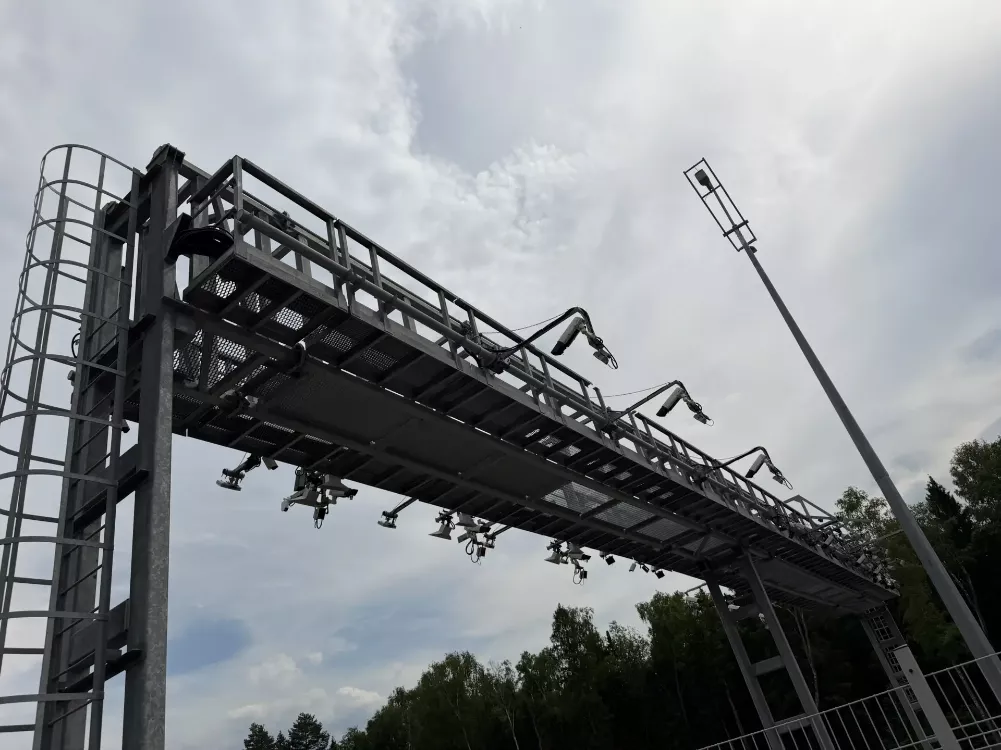
Traffic management is handled by an intelligent system. The automated complex used on the chord incorporates the latest technical innovations in the field. For example, the free-flow tolling system uses computer vision algorithms for license plate recognition, vehicle classification, and traffic incident detection. Work is underway to integrate artificial intelligence into the analysis of passage transactions, enabling the automatic detection of anomalies, the recognition of the specific color schemes used by emergency service vehicles, and the generation of advanced traffic analytics. These solutions enhance data processing accuracy and ensure a higher level of safety.
A 90 km/h speed limit is currently in effect on the expressway; however, the quality of the road surface and the safety standards are designed to accommodate higher speeds. Measures to raise the speed limit to 110 km/h are currently being evaluated.
The total term of the concession is 15 years. VIS Group is implementing the project on a turnkey basis, acting as the investor, general contractor, and highway operator through 2038. The concessionaire handles both technical and commercial operations, including toll collection, road infrastructure maintenance to regulatory standards, and the management of the automated traffic control system. To this end, VIS Group established its own dedicated toll road operator, Transtoll. In addition to the Mytishchi Expressway, the company operates the Khabarovsk Bypass highway and the bridge crossing over the Ob River in Novosibirsk. The total length of highways built or under construction by VIS Group is approximately 100 km.
Follow VIS Group:


